 Free quote
Free quote
Free quote
Walton County
Permanent LED, holiday, landscape and event lighting in Loganville, GA. We are based here — Walton and Gwinnett county homes, large lots and long drives.
Loganville is home. Bridges Lighting Pros is based here, which means the shortest drive we make all week is to a job in town — permanent LED roofline lighting, holiday lighting on a lease, landscape and patio lighting, and event work. Loganville sits on the Walton–Gwinnett line along Highway 78, and the housing on either side of that line is different enough that the two halves of town need different answers.
Call (770) 630-4653.
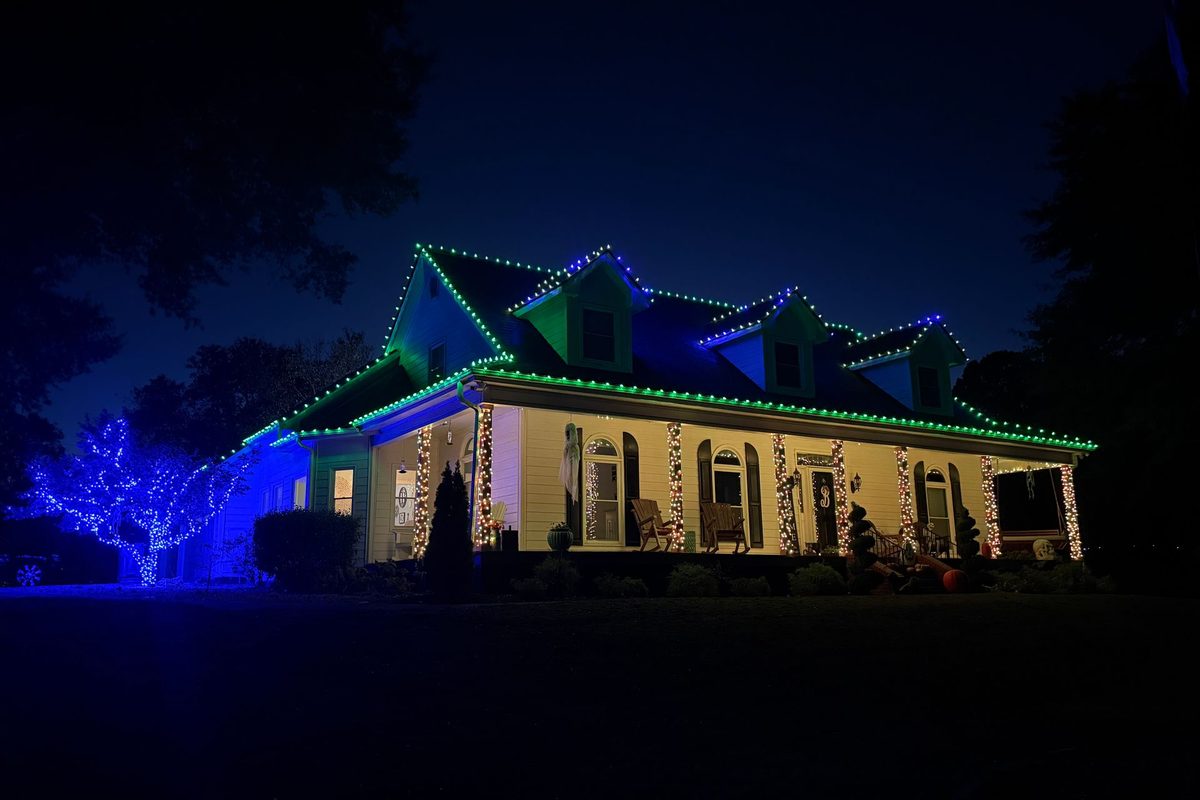
The Gwinnett side, closer to Snellville, is mostly subdivision development from the 1980s onward — ranches, split-levels and two-storey traditionals on quarter- to half-acre lots, close enough together that a lit roofline is seen by the whole street. These are efficient permanent-lighting jobs. Rooflines are regular, access is easy, and the visual return is high because the houses are close to the road.
Head east and south into Walton County and the lots get bigger fast. Acre-plus properties, older farmhouses, newer custom builds on wooded land, long drives and a good deal of pasture and hardwood. Here the roofline is often a hundred yards back and half-screened by oaks, which changes the priority: the drive, the trees and the front elevation at ground level do more work than the roof edge does.
That split is worth naming because it is the difference between a good design and a generic one, and it is not something you can see from an aerial photograph.
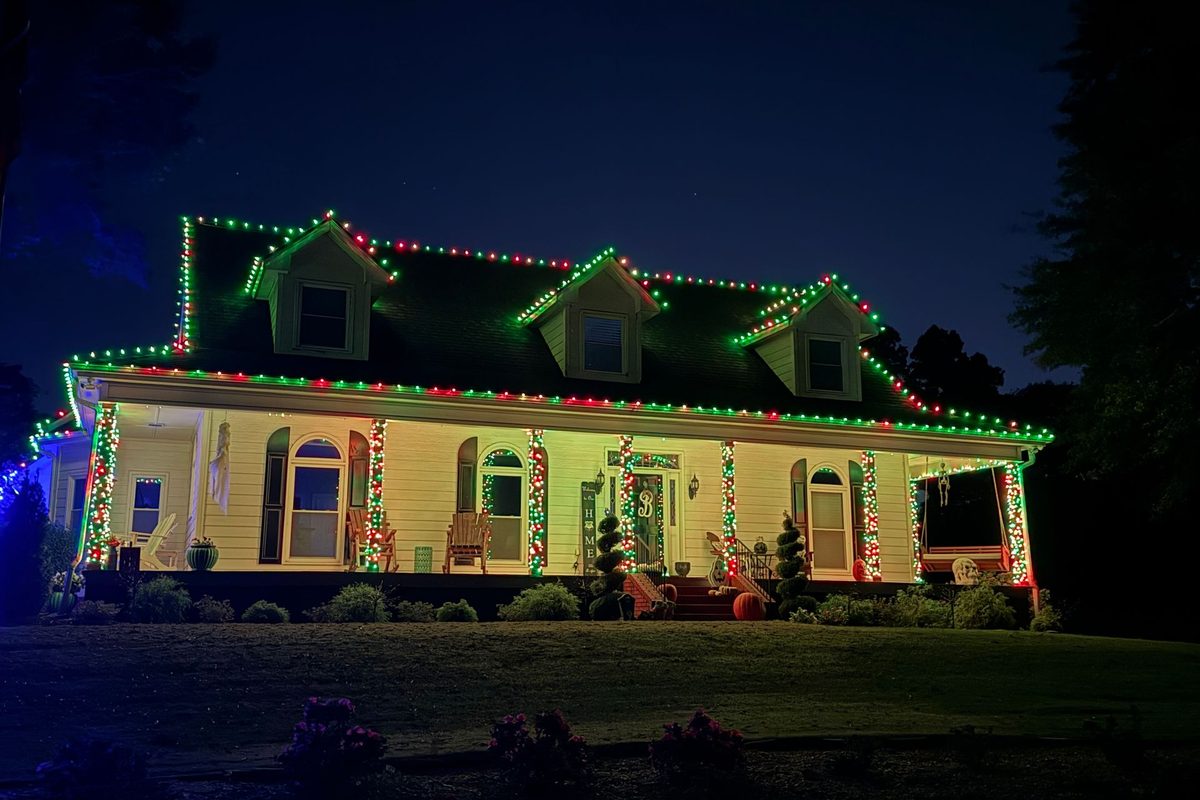
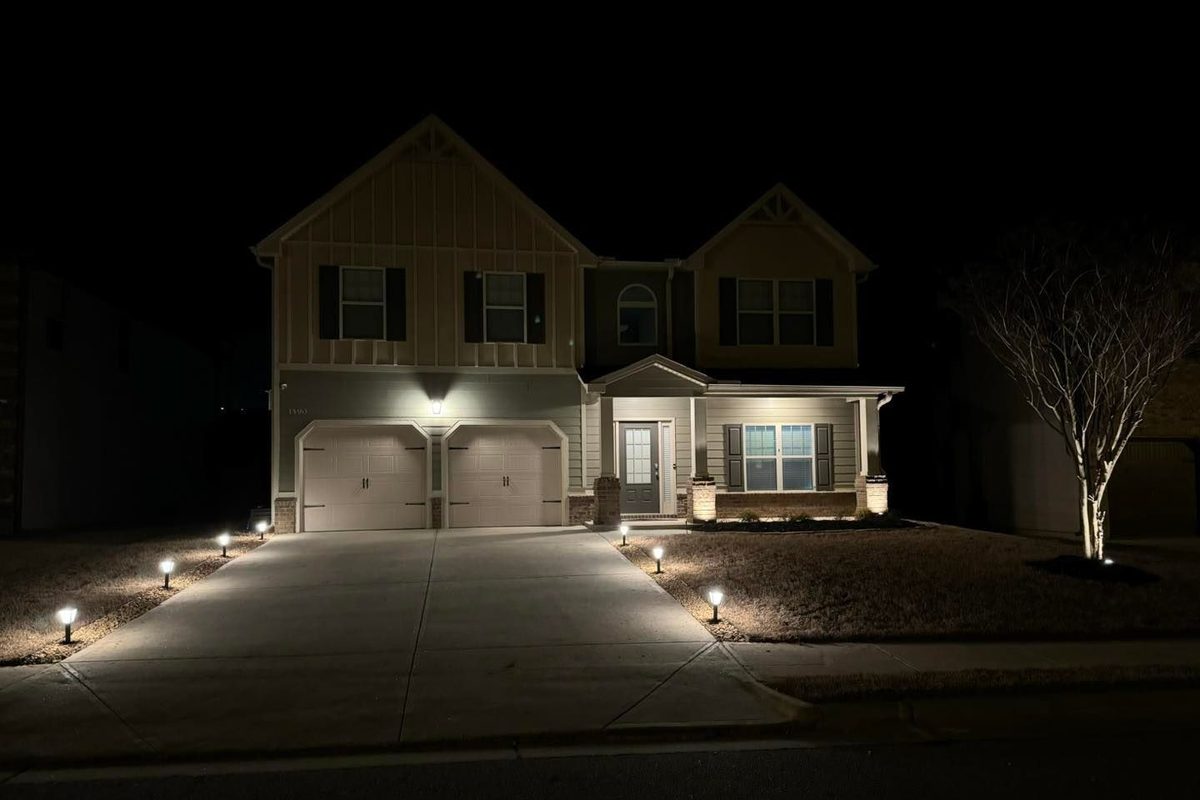
Permanent roofline lighting on the subdivision homes, usually run in warm white as the default with colour for the calendar. Simple gable and hip roofs here light cleanly, and installations run one to two days.
Landscape uplighting on the larger Walton County lots. Mature oak and poplar uplit along a drive does more for a property set back from the road than anything on the roof, and the two work well together where the budget covers both.
Holiday lighting on a lease across both. Roofline runs, tree wraps on the big hardwoods, shrubs and wreaths — installed from October, serviced through December 23rd, taken down from January 1st and stored by us.
Café and patio lighting on back decks and covered porches, which almost every house out here has and most of them under-use after dark.
For a company an hour away, a single dark section on your roofline in December is a bad economic proposition — it is a two-hour round trip for a ten-minute fix. That is how in-season service calls end up scheduled for "sometime next week."
We are in Loganville. A service call in town is a short drive, which is the real reason the 24-hour in-season response is a commitment we are willing to make rather than a marketing line.
Services
Nearby
Questions
Yes, and Grayson, Between, Monroe, Bay Creek and the unincorporated areas around them. The city limits are not the boundary; the county line runs straight through town and nobody's roofline cares about it.
Possibly, and we will tell you if it is. A front elevation that is fully screened by mature canopy from the road gets very little out of roofline lighting, and the money is better spent uplighting the trees doing the screening. Plenty of Walton County properties are in exactly that position.
The way to settle it is to stand at the end of your drive after dark and see how much of the house you can actually see. That is what we do on the site visit.
Yes, with a look first. Older framing, wood fascia in varying condition and eave details that change along the same elevation all affect how the channel gets mounted. None of it is prohibitive. It just means the design gets done on site rather than assumed, and occasionally it means we recommend fascia repair before the lighting rather than mounting new hardware onto board that needs replacing.
Most single-family installs are a one-day job. The crew arrives, confirms the layout that was agreed at the design visit, runs the track along the fascia or the roof edge, sets the transformer somewhere discreet near an exterior outlet, and commissions the system before leaving.
You do not need to be home for the bulk of it, though it helps to be there at the start so the design is confirmed against the actual house rather than a photograph, and at the end so somebody walks you through the app.
The part people do not expect is how little there is to see afterwards. On a properly installed permanent system the track sits in the shadow line under the gutter or along the fascia edge, colour-matched to the trim, and from the street in daylight the house looks the same as it did before.
Permanent lighting is low-voltage LED, which means there is very little to fail and what does fail tends to be a connection rather than a light. The usual culprits are a transformer that has lost power at the outlet, a connector that has worked loose, or a section that has taken physical damage — a ladder, a gutter clean, a branch.
Because it is low voltage, diagnosing it is not dangerous and it is not a call-an-electrician situation. A section can be repaired or replaced without redoing the run.
Worth asking directly at the quote what the warranty covers and for how long, on both the hardware and the labour. Manufacturers and installers cover different things for different periods, and the answer should be in writing rather than remembered from a conversation in the driveway.
Yes, and on the larger lots it is often the better half of the job. Path lighting along a long drive, uplighting on the trees flanking it, and lighting at the turn-in where guests miss the entrance in the dark. It runs on buried low-voltage cable off a transformer and can be phased over two seasons if the whole thing at once is too much.
Call (770) 630-4653 for a site visit anywhere in Loganville.
Being twenty minutes away is also what makes a service call same-week rather than next-month.
For permanent lighting, the quiet months. Demand concentrates hard in autumn because people think about exterior lighting when the evenings draw in, which means late summer onwards is when the calendar tightens.
Installing in spring or early summer costs the same and gets you the date you asked for. It also means the system is commissioned and tested well before the season you actually bought it for, rather than being switched on for the first time the week you want it working.
Get in touch
Call and talk to someone who does the work, or send the details and we'll get back to you.
Call (770) 630-4653