 Free quote
Free quote
Free quote
Wedding Lighting
Wedding lighting across North Georgia — ceremony, reception, tent and venue lighting, installed and struck around your venue's schedule. (770) 630-4653.
Wedding lighting covers the ceremony space, the reception, and everything between them: bistro strings over a courtyard or tent, uplighting on walls and trees, curtain and fairy lighting behind a head table, arch and altar lighting, aisle and pathway lighting for guests walking in the dark, and dance floor lighting that does not turn the room into a nightclub unless you want that.
Bridges Lighting Pros installs at venues, barns, private estates and homes across North Georgia. Call (770) 630-4653 with your date and venue.
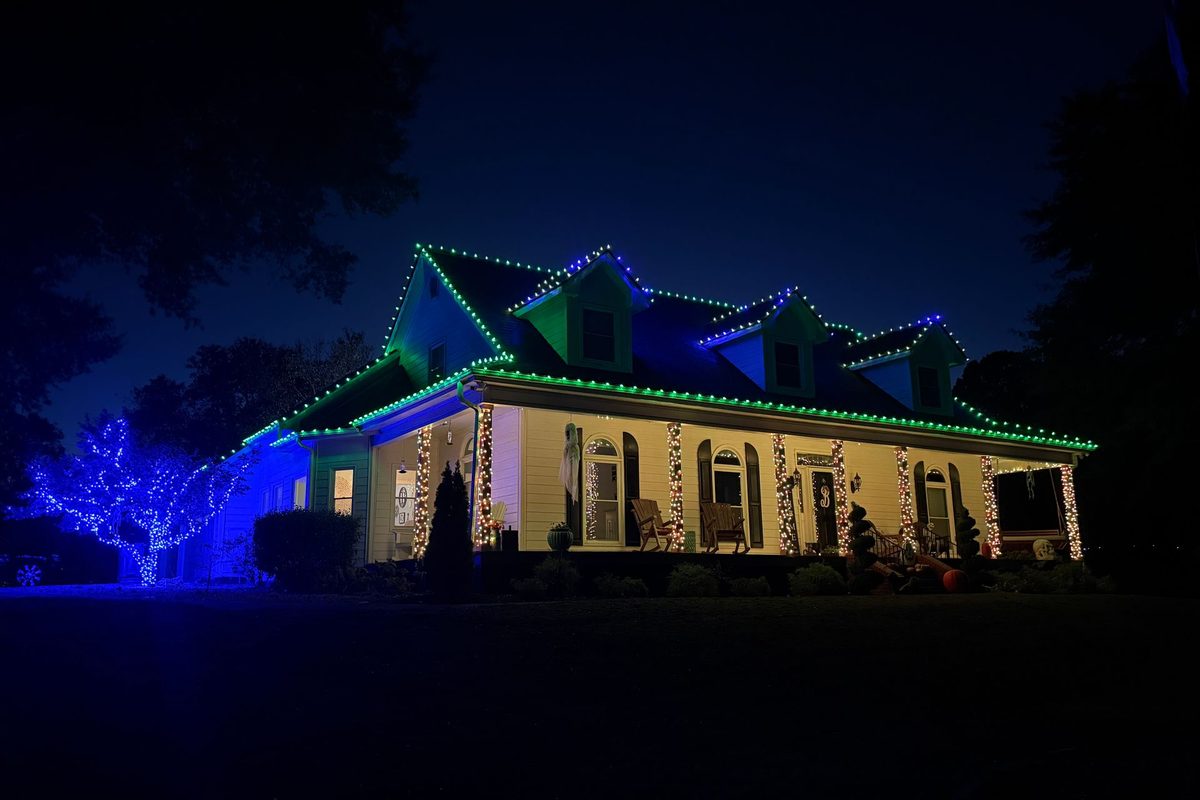
Weddings are not a lighting problem, they are a scheduling problem with lighting in it. Almost every venue has a fixed load-in window, and it is usually shared with the caterer, the florist, the rental company and the band. Barn and estate venues frequently host an event the day before yours, which means load-in cannot start until that one is struck.
So the first questions we ask are about the schedule rather than the design. When can we get in. What is already in the room. Who is hanging what from the same beams. Where the power is, how much of it there is, and what else is on that circuit — because a 30-amp service feeding a caterer's warming units, a band's PA and your lighting is a conversation to have in advance rather than at 6pm.
Strike is the same in reverse. Some venues want everything out that night; some allow next-day pickup. It changes the crew plan and it belongs in the quote.
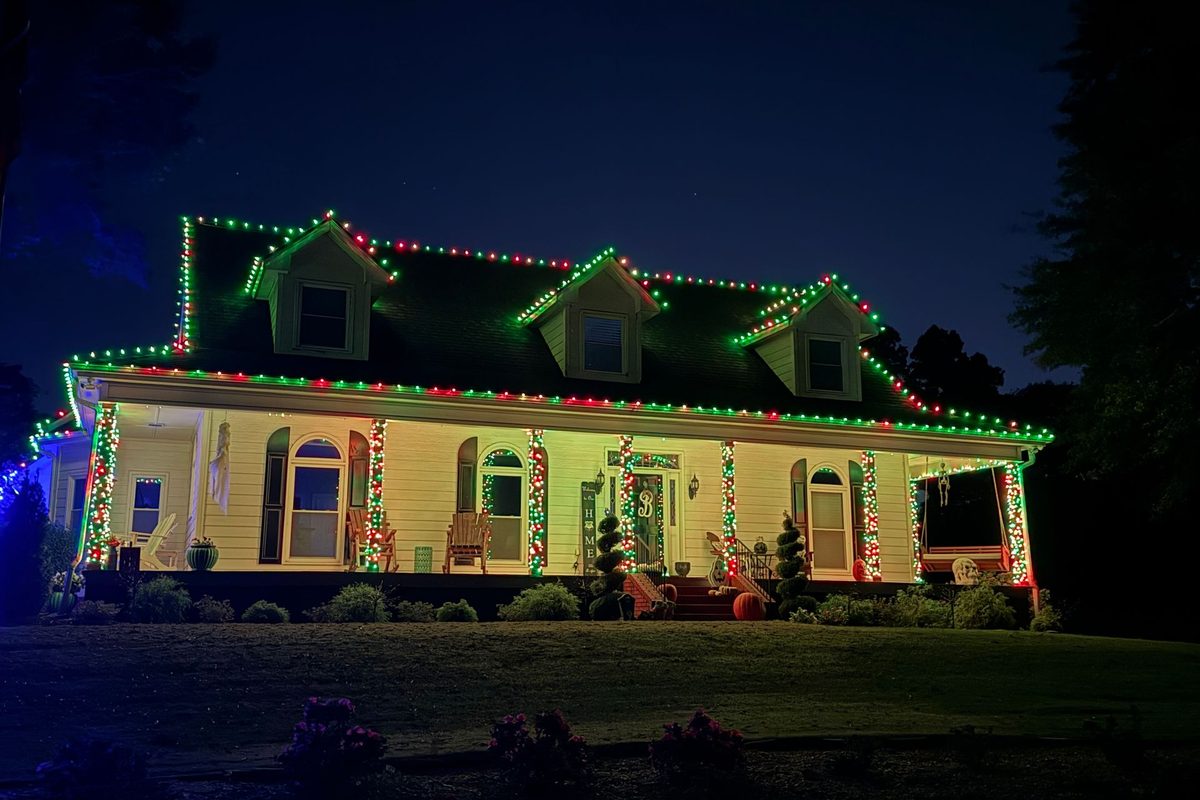
Bistro and string lighting. Over courtyards, tented receptions, patios and lawns. On a tented reception, hung from the frame; on an open space, on tensioned cable between anchor points or set posts.
Uplighting. Colour or warm white against walls, columns, tree trunks and the inside of a tent. The cheapest way to change the entire feel of a room, and the easiest to overdo.
Fairy light curtains and canopies. Behind a head table, across a ceiling, down a barn wall. Photographs extremely well, which is usually the point.
Ceremony lighting. Arches, altars and backdrops, plus aisle and path lighting for guests arriving or leaving in the dark. Outdoor evening ceremonies in particular tend to be under-planned for the walk back to the cars.
Pathway and safety lighting. Car parking, uneven ground, steps and bridges. Not glamorous, and the thing venue coordinators are most grateful for.
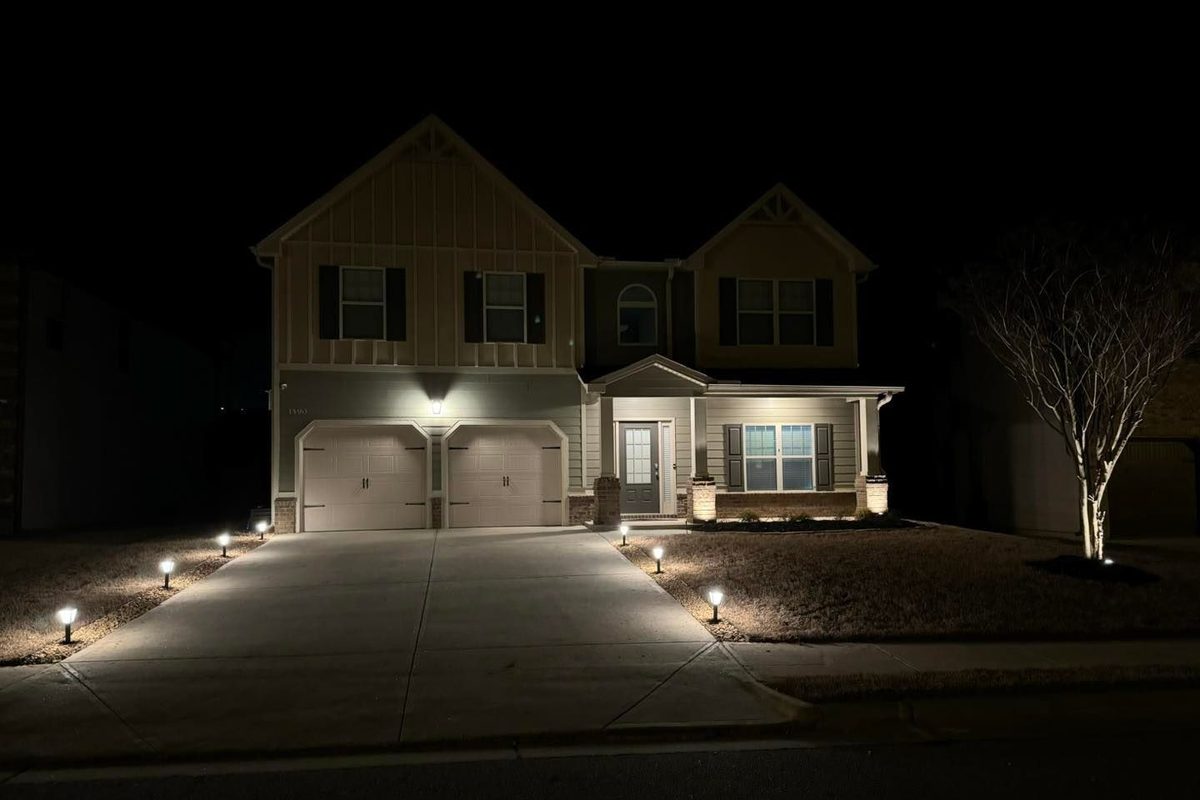
Most of our wedding work comes through planners and venue coordinators, and the process is easier when they are in the conversation early. They know the venue's rules — what may be attached to a beam, whether open flame is allowed near fabric, what the load-in window really is as opposed to what the contract says.
We would rather do a walk-through of the actual venue than work from photographs and a floor plan. For venues we have worked before, that step can sometimes be shortened. For anywhere new, it is worth an hour.
Included
Typical range: Quoted per event
Coverage
Questions
Two to three months is a reasonable target, and earlier for peak season — spring and autumn Saturdays in North Georgia book out well ahead. The design does not have to be settled that far in advance; the date does.
If your date is close, ask anyway. Cancellations happen, and a simple install can sometimes be fitted where a complex one cannot.
Yes, and this is worth planning specifically. A ceremony that starts in daylight and finishes after sunset needs lighting that is invisible at 5pm and doing real work by 7pm. That usually means fixtures placed and aimed in advance, brought up on a dimmer rather than switched on, plus path lighting for the transition to the reception.
Add a rain plan. If the ceremony has an indoor or tented fallback, the lighting plan needs one too, and it is far cheaper to design that in advance than to solve it on the morning.
It depends on the venue and it is one of the first things we check. Many barns and estates have adequate exterior power in some places and none at all in others. Where a run is long or the supply is limited, we plan the layout around what exists, and where genuinely necessary we will design for a generator — which is a decision that has to be made early, not on the day.
Outdoor fixtures and strands used for weddings are rated for weather, so rain itself is not the problem. The problems are ground conditions for install, and whether the event moves indoors or under cover.
If your venue has a rain plan, tell us at booking and we will price the contingency rather than improvise it. A wet Saturday is a bad day to be inventing a second lighting design.
Yes, and for a wedding that coordination is most of the job. The lighting plan has to fit around the timings everyone else is working to — when the space is available, when the ceremony flips to the reception, when photographs happen.
Venues also have their own rules about what may be attached to what, and some have an in-house supplier or an approved list. Establishing that early avoids the worst version of this, which is arriving on the day and being told a fixing method is not allowed.
Less than people expect, and different things than they expect. Photographers work with their own light for the formal shots; what venue lighting changes is the atmosphere in the candid and evening pictures, and the background of everything.
That argues for lighting the space rather than the people — warm light on the structures, the trees, the tent lining and the tables, and restraint on anything that throws colour onto faces. Strongly coloured uplighting looks striking in person and is difficult in photographs, because it tints skin.
The other thing worth doing is a walk at the time of day the reception runs. A space lit for eight o'clock in June and the same space at eight in October are not the same problem.
Frequently. If several events run across a weekend at the same venue, doing them as one job is cheaper than three separate installs, because the infrastructure — anchors, power runs, uplighting positions — only goes in once.
Call (770) 630-4653 with your date, your venue and roughly what you have in mind.
Get in touch
Call and talk to someone who does the work, or send the details and we'll get back to you.
Call (770) 630-4653