 Free quote
Free quote
Free quote
Fulton County
Permanent LED and landscape lighting in Milton, GA — estate lots, equestrian properties, long drives and Crabapple. Designed on site, after dark.
Milton is the acreage end of north Fulton, and that single fact changes almost everything about how a property gets lit. Estate lots, equestrian properties, board-fenced pasture, long private drives and houses set several hundred feet back from the road. On a property like that, roofline lighting is rarely the first thing worth spending money on, and any company that quotes it as the default has not looked at the site.
Bridges Lighting Pros installs permanent LED lighting and landscape lighting across Milton. Call (770) 630-4653.
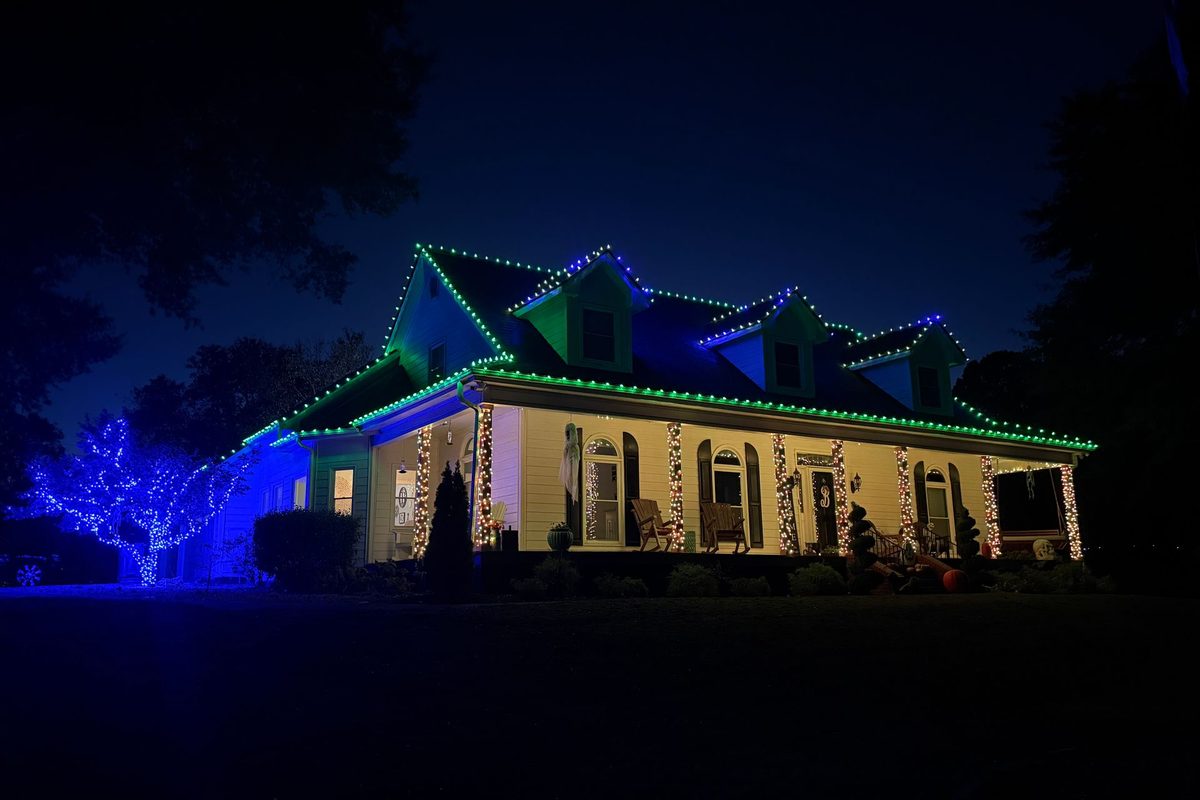
The experience of a Milton property at night starts at the road and takes a quarter of a mile. That sequence is what should be designed: the entrance where guests find the turn-in, the drive itself, the trees flanking it, the arrival court, and then the house.
Drive lighting done well is a set of light pools rather than a continuous runway — spaced far enough apart to read as rhythm, shielded so a driver sees the edge of the drive rather than the fixtures. Uplighting on the hardwoods along the drive does most of the atmospheric work. Something at the entrance, whether that is column lighting on a gate or a lit specimen tree, solves the practical problem of people driving past your turn-in in the dark.
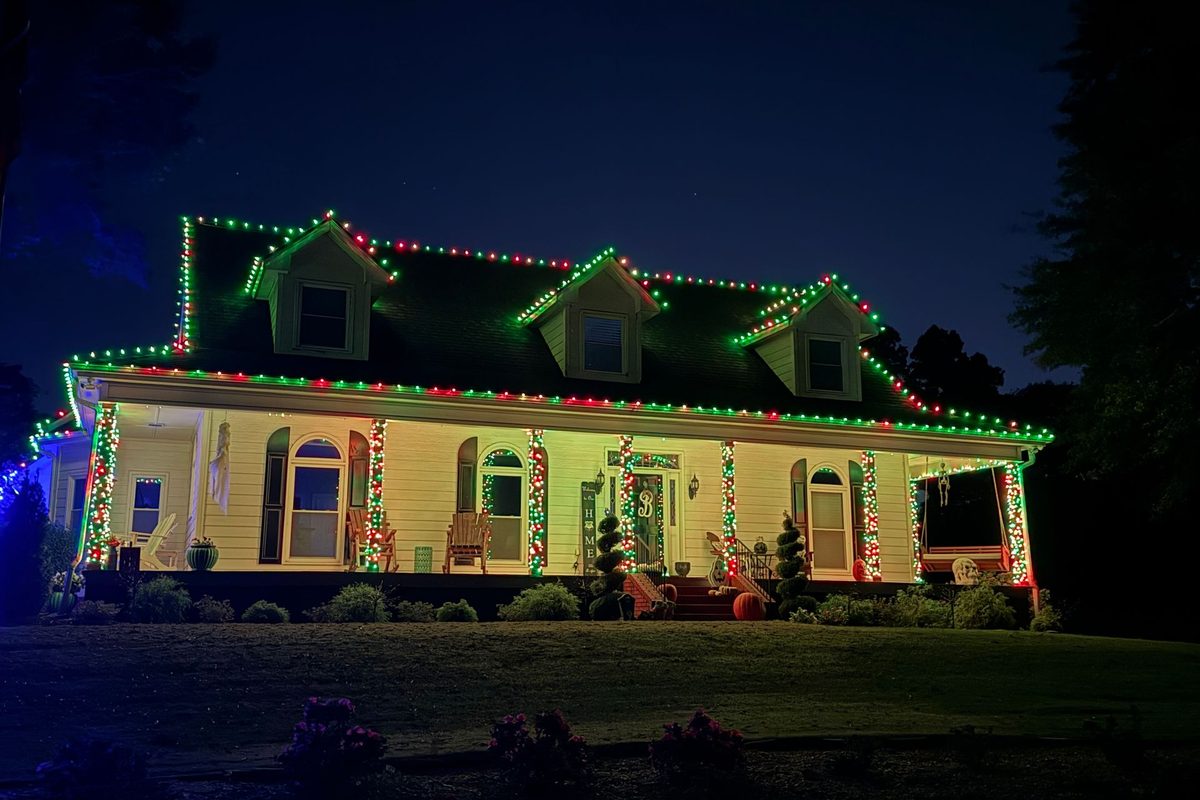
By the time you reach the house, roofline lighting is doing a supporting job rather than the whole one — and on a house four hundred feet back, a roofline is a thin line at that distance while grazing light on the elevation reads as mass and material.
Working properties add lighting requirements that a subdivision never has. Barn aisles and approaches used after dark. Paddock gates. The route from the house to the barn on a February evening. Arena and turnout areas where the priority is functional light without glare into a horse's eye line.
None of that is decorative lighting and it should not be designed as if it were. It also usually needs its own zones and its own schedule, because the barn wants light when someone is out there and dark when they are not, on a different pattern from the house.
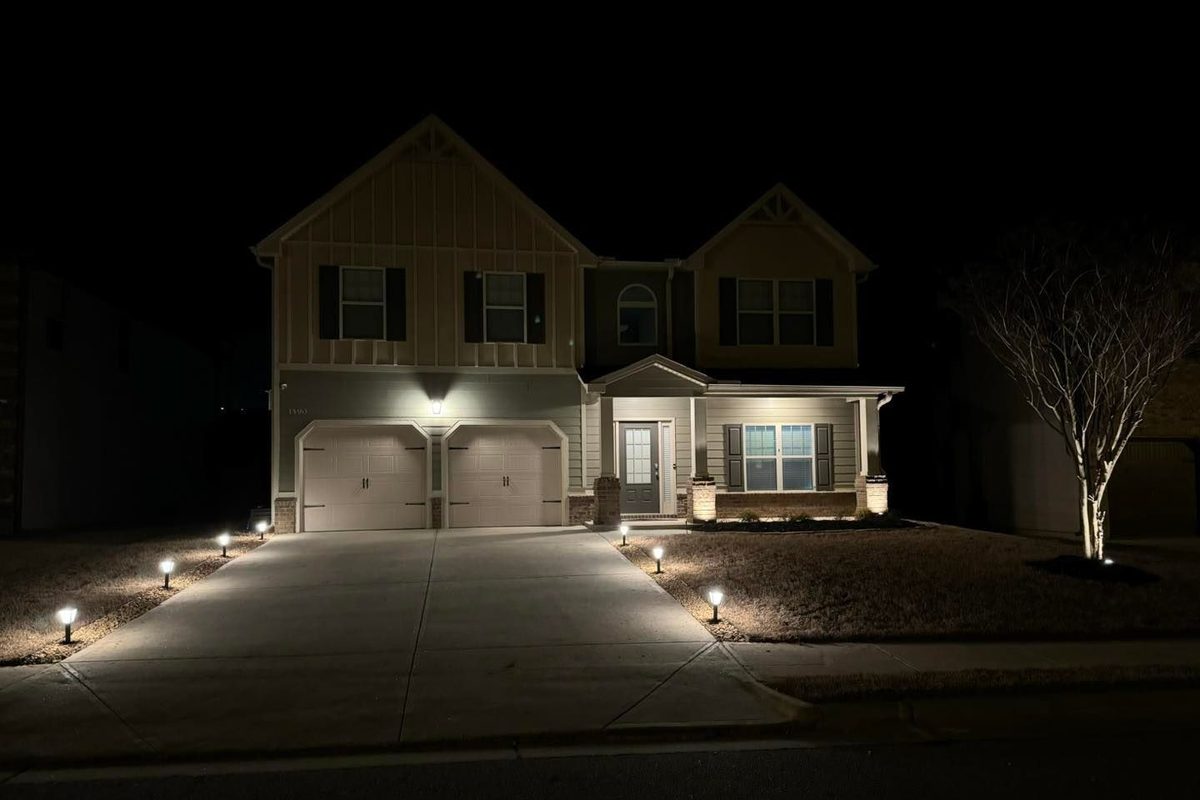
Milton's identity is built on retaining a rural character, and that has practical implications for exterior lighting. Restraint is not just an aesthetic preference here — dark-sky-minded lighting, shielded fixtures, warm colour temperature and downward aiming is both the local expectation and, on a large lot, the version that actually looks better.
Requirements vary by property and by any applicable community or overlay standards, and you should confirm what applies to yours. What we would recommend on a Milton estate is close to what a restrictive standard would ask for anyway: fewer fixtures, aimed carefully, warm, and pointed down.
Services
Nearby
Questions
On most Milton properties, yes. The drive is where the property is experienced from, it is the part with a genuine safety argument, and it is where the mature trees are. A lit approach with a restrained house at the end reads far better than a lit house at the end of a dark tunnel.
By planning them rather than discovering the problem afterwards. Long runs are where voltage drop shows up — the fixtures at the far end reading dimmer and yellower than the ones near the transformer. That is solved with correctly sized cable, multiple transformers or hub-and-spoke wiring, and it is a design decision made before anything is trenched.
Yes, and it is normal work on properties out here. The design priorities are function and glare control rather than atmosphere, and these areas usually get their own zone and schedule so the working parts of the property are not tied to the house's lighting.
By not running everything from the house. On acreage the drive, the entrance and the outbuildings are often hundreds of feet from the nearest outlet, and trying to feed all of that from one transformer at the house is how you get a dim, warm, unreliable run at the far end.
The normal approach is distributed: a transformer positioned near each cluster of fittings, fed from a nearby power source, rather than one central unit doing everything. Where there is no power near the entrance, that becomes a real line item and it is better known at design than at install.
Cable sizing is the other half. Heavier cable costs more per foot and solves voltage drop that no amount of brighter fittings will fix.
The approach, almost always, and it is the cheapest part of the job to get right.
A long unlit drive is the thing guests actually experience, and lighting it changes how the property reads far more than adding fittings to a house that is already visible. Low, shielded fittings along the drive, something at the entrance, and enough at the turnaround to park by covers most of it.
The house can then be done as a second phase, which spreads the cost and lets you see how the first phase looks before committing to the rest. Designing the whole property at once and installing it in stages is a normal way to do this, and it avoids the mismatch you get from two unrelated designs done years apart.
Yes — Milton, Crabapple, Alpharetta, Roswell, Johns Creek and the surrounding north Fulton area. Call (770) 630-4653 to arrange a design visit, ideally after dark.
Yes, and on a large property it is usually the sensible route. The whole property gets designed once, then installed in stages — approach first, then the house, then outbuildings or feature areas.
Designing it all up front is what makes the phases match. Two separate designs done years apart almost never do, and the mismatch is visible in colour temperature, fitting style and beam angle even when each phase is good on its own.
On acreage it changes more than people expect — beds get extended, trees mature, drives get resurfaced. Landscape fittings are the ones affected; a roofline system is unaffected by any of it.
The practical protection is knowing where the cable runs are before anybody digs. A documented layout handed over at commissioning is worth asking for, because the alternative is a contractor finding a low-voltage run with a trencher and nobody being able to say where the rest of it goes.
Get in touch
Call and talk to someone who does the work, or send the details and we'll get back to you.
Call (770) 630-4653